Noun: Tutorial- 1: Proper nouns vs Common nouns: For kids!
Hello, young learners! Today, we’re going on a thrilling journey into the fascinating world of nouns – the building blocks of language. So buckle up, put on your thinking caps, and get ready for an exciting ride!
Nouns are words that name people, places, things, or animals. There are two types of nouns we’ll be exploring today: Proper Nouns and Common Nouns.
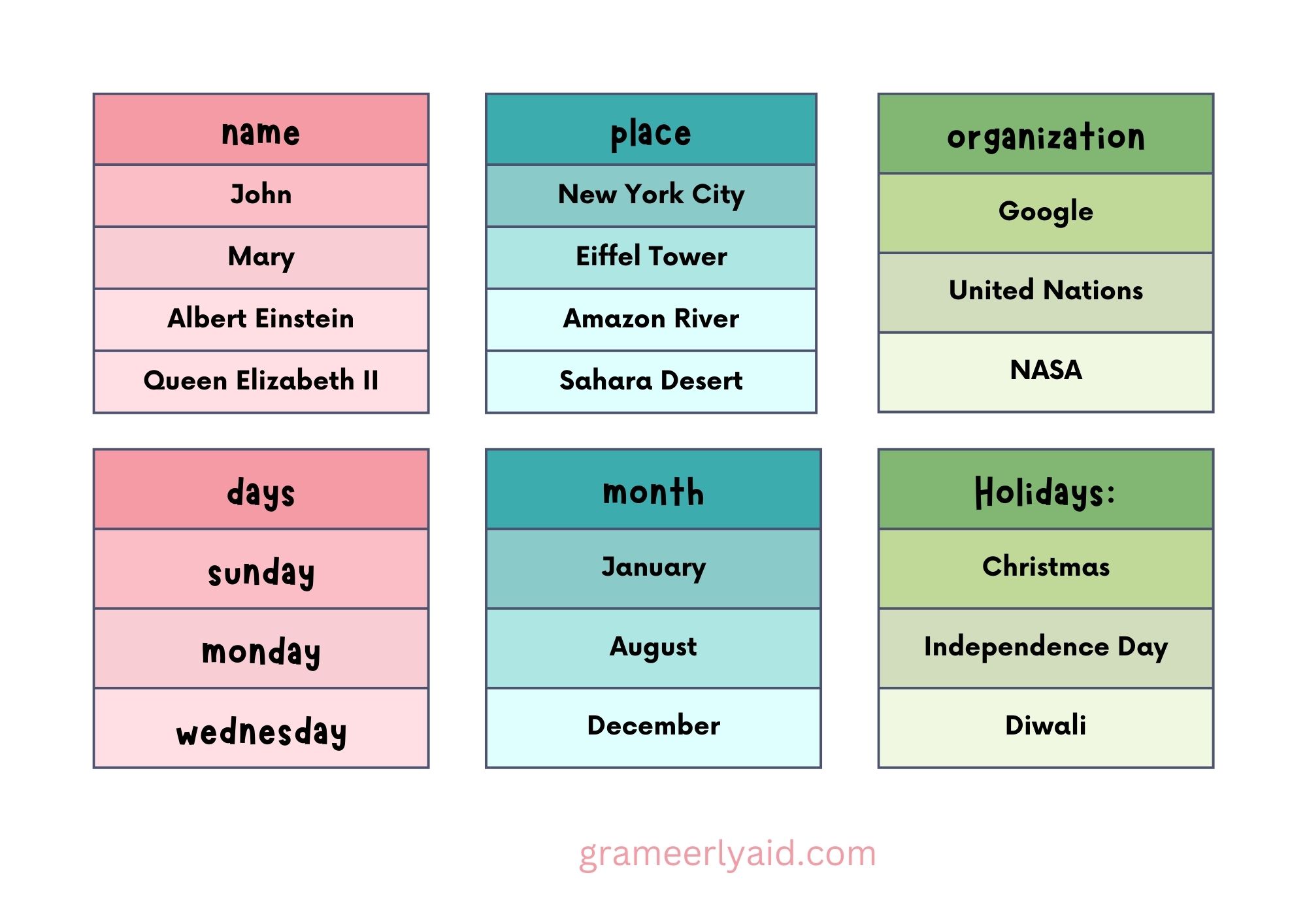
Proper Nouns:
A proper noun is a specific name used for an individual person, place, or organization and is usually capitalized. Proper nouns help identify unique entities. Here are some examples:
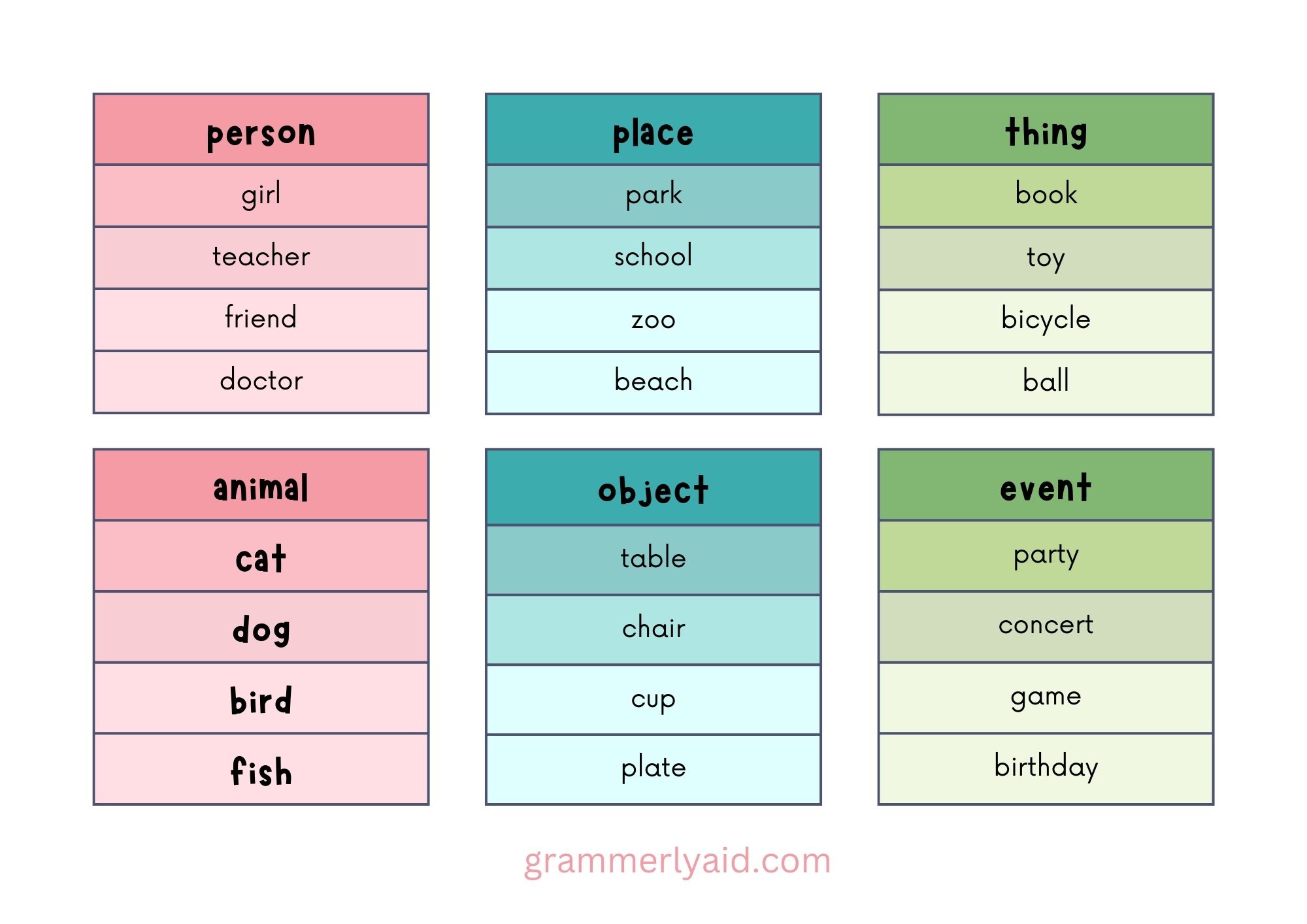
Common Nouns:
A common noun is a name given in common to every person or thing of the same class class or kind. Here are some examples:
Rules of Proper Nouns and Common Nouns:
Proper Nouns:
Capitalization: Always capitalize the first letter of a proper noun.
Example: Mary, London, Eiffel Tower
Specific Individuals or Unique Items: Proper nouns refer to a specific person, place, or thing.
Example: Mr. Smith, Mount Everest, Disney World
Days, Months, and Holidays: Proper nouns include names of days, months, and holidays.
Example: Monday, July, Christmas
Titles and Names: Titles and names of books, movies, and songs are proper nouns.
Example: “Harry Potter,” “The Lion King,” “Happy Birthday”
Brands and Companies: Names of brands, companies, and organizations are proper nouns.
Example: Coca-Cola, Microsoft, NASA
Common Nouns:
Not Capitalized: Common nouns are not capitalized unless they start a sentence.
Example: cat, city, book
General and Non-Specific: Common nouns refer to general people, places, or things.
Example: teacher, park, car
Categories or Classes: Common nouns represent categories or classes of things.
Example: animal, fruit, school
No Specific Individual: Common nouns do not refer to a specific person, place, or thing.
Example: girl (not a specific girl), mountain (not a specific mountain)
Worksheets:
Worksheet 1: Proper Noun or Common Noun?
The Statue of Liberty – ________ (Proper/Common)
River Nile – ________ (Proper/Common)
doctor – ________ (Proper/Common)
Thursday – ________ (Proper/Common)
bicycle – ________ (Proper/Common)
McDonald’s – ________ (Proper/Common)
January – ________ (Proper/Common)
beach – ________ (Proper/Common)
The Great Wall of China – ________ (Proper/Common)
dog – ________ (Proper/Common)
Worksheet 2: Create Your Own Nouns
Think of three proper nouns and write a sentence for each.
Example: Proper Noun: Paris
Sentence: I dream of visiting Paris one day.
Think of three common nouns and write a sentence for each.
Example: Common Noun: tree
Sentence: The tree outside my window provides shade in the summer.
Differences Between Proper Nouns and Common Nouns:
Definition:
Proper Nouns: Refer to specific, unique individuals, places, or things and are always capitalized.
Example: Mary, Paris, The Eiffel Tower
Common Nouns: Refer to general categories or classes of people, places, or things and are not capitalized unless at the beginning of a sentence.
Example: girl, city, building
Capitalization:
Proper Nouns: Always start with a capital letter.
Example: Monday, Samsung, Africa
Common Nouns: Generally do not begin with a capital letter unless starting a sentence.
Example: day, phone, continent
Specificity:
Proper Nouns: Point to a particular person, place, or thing, providing a unique identity.
Example: Mr. Johnson, Pacific Ocean, The Mona Lisa
Common Nouns: Refer to general, unspecific individuals, places, or things.
Example: teacher, ocean, painting
Usage in Sentences:
Proper Nouns: Often used to name specific entities in sentences.
Example: Mary is a talented singer.
Common Nouns: Used to refer to general concepts without specifying a particular instance.
Example: A singer needs to practice regularly.
Capitalization in a Series:
Proper Nouns: Each proper noun in a series is capitalized.
Example: We visited Paris, London, and Rome.
Common Nouns: Typically not capitalized in a series unless they start a sentence.
Example: We saw the Eiffel Tower, a bridge, and a museum.
Generic vs. Specific:
Proper Nouns: Are always specific and unique.
Example: The Titanic, Honda Accord
Common Nouns: Can be generic and represent a class or category.
Example: A ship, a car
Understanding these differences helps in correctly identifying and using proper nouns and common nouns in writing and communication.
1. I have a cat. Her name is ____________.
2. Let’s go to the ____________ after school.
3. My favorite fruit is ____________. I eat it every morning.
4. We visited a museum. The ____________ Museum is famous for its art collection.
5. My friend has a dog. Its name is ____________.
Conclusion:
Learning about nouns can be so much fun! Remember, proper nouns are special names for specific things, while common nouns are general names for everyday things. Keep exploring and enjoy your language adventure, little word detectives!
Stay tuned for more language fun and learning. Until next time, happy noun discovering, Grade 1 pals! 🌟📚✨