An auxiliary verb, also known as a helping verb, is like a friend that helps the main verb in a sentence. It works together with the main verb to show different meanings, such as time, possibility, or necessity.
For example, in the sentence “I am playing,“ the word “am” is the auxiliary verb helping the main verb “playing.” It makes the sentence complete and gives more information about when the action is happening. So, auxiliary verbs are like teamwork words that make sentences more interesting!
Definition of a Auxiliary Verb
Those verbs which are used with other verbs to express question, negative and tense are used to express possibility and willingness, they are called auxiliary verbs. These are also called helping verbs. In other words say, The verb which helps the main verb in forming tense, voice, mood, etc. is called a helping verb.
Example: The words in bold in these sentences are helping verbs…
I am playing.
He will come.
My brother has gone.
You should do this.
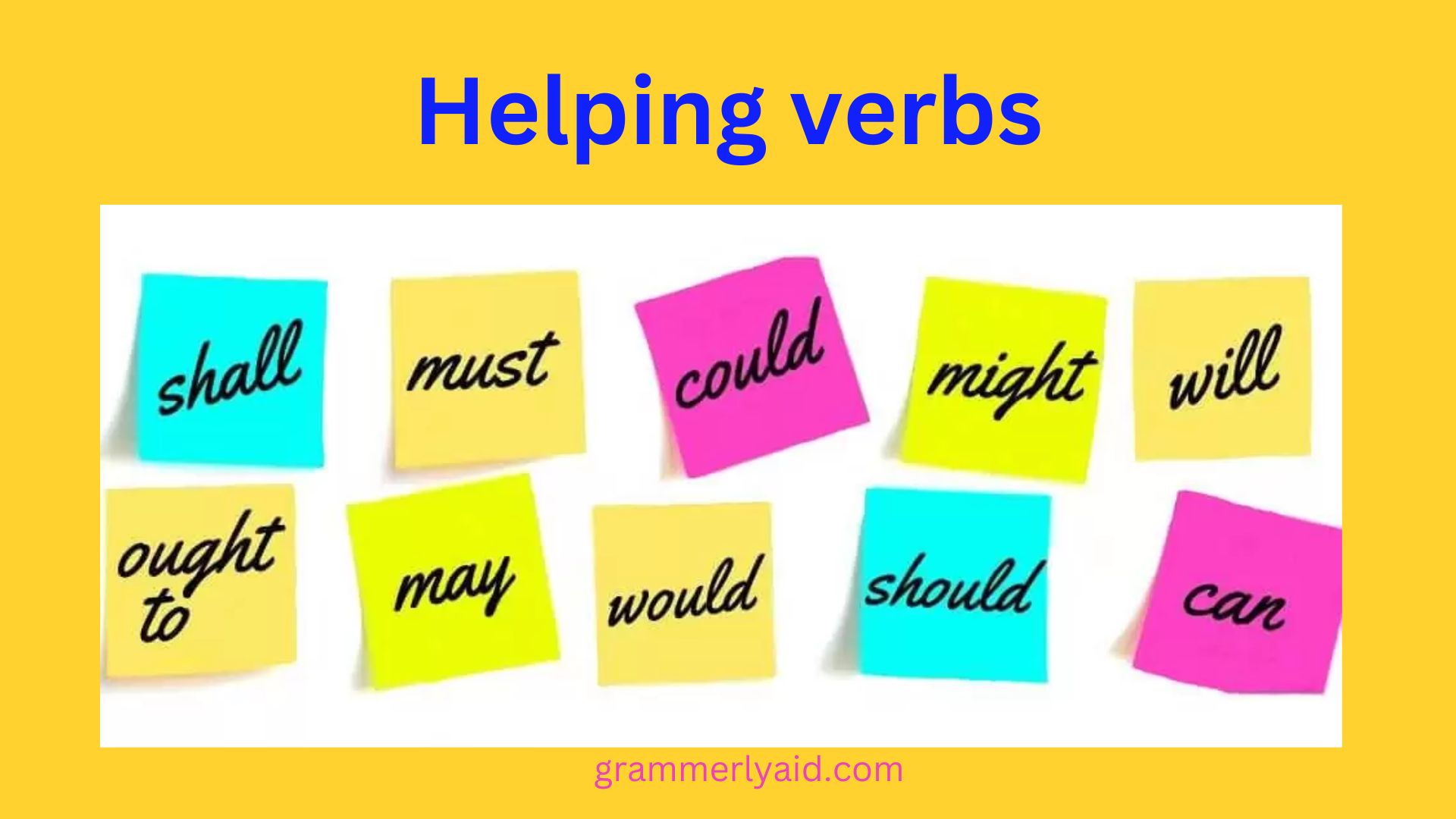
The following are the main helping verbs – am, is, are, was, did, were, do, does, have, has, had, shall, will, can, could, may, might, must, ought, should, would, need, dare, used to. These Auxiliary Verbs are used like Main verbs and sometimes like Helping verbs.
Types of Auxiliary Verbs
Auxiliary verbs/Helping verbs are 03 types in English’s grammar.
Primary Auxiliary
Modal Auxiliary
Type 1: Primary Auxiliary
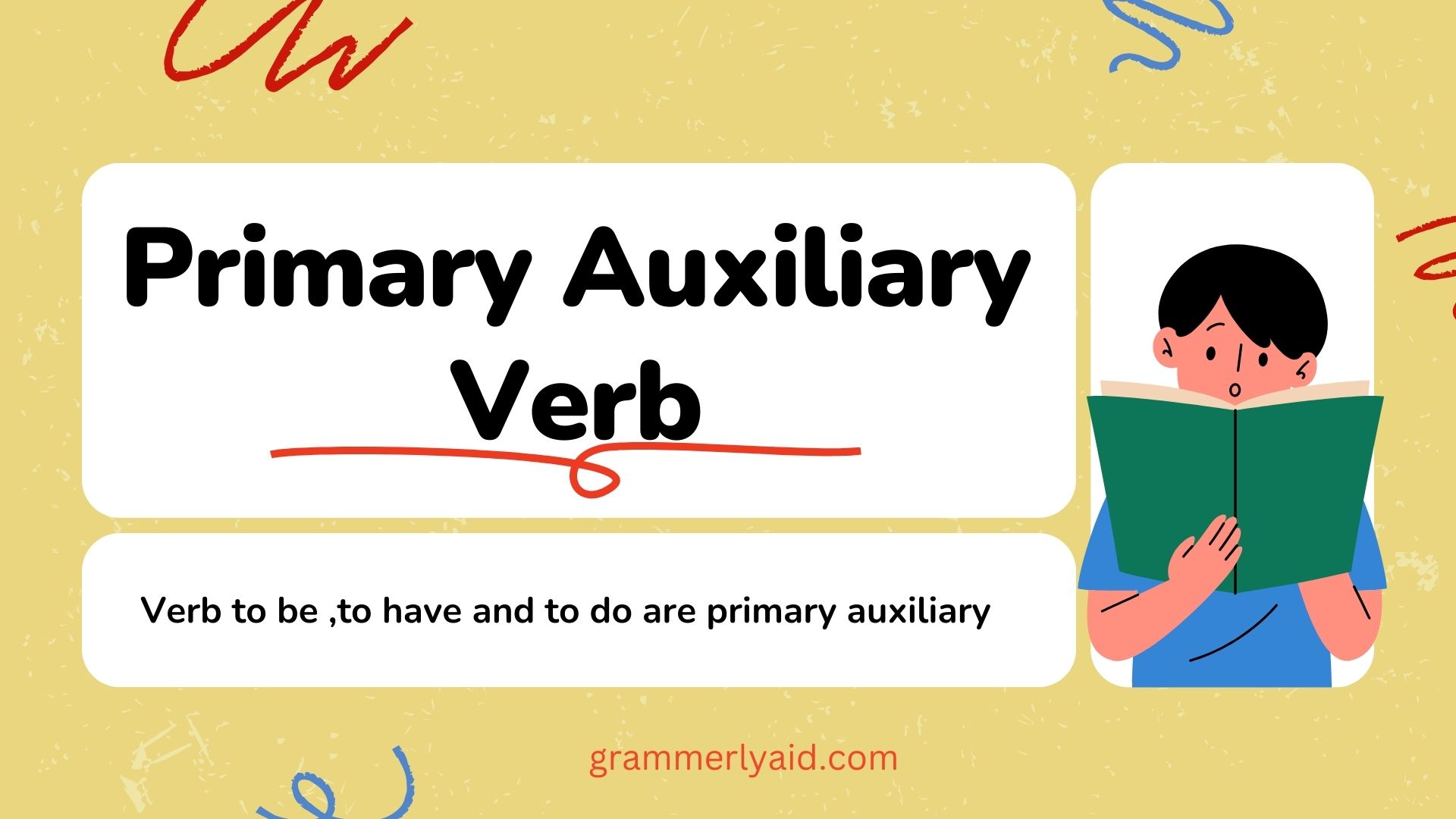
Verbs that are used as Main Verb are defined as Primary Auxiliary Verb. In other words, the Verb to be, Verb to have, and Verb to do are called Primary Auxiliary Verbs. They are mainly used as the main verbs in the sentence.
They are called primary auxiliaries because they help in making many grammatical constructions. As (I) question, (II) tense, (III) passive voice, and (IV) their forms also keep changing according to the number and person of the subject.
Auxiliary Verb Forms
The 03 common auxiliary verbs are “to be,” “to have” and “to do.” Each of these types has multiple forms:
to be – am, is, are, was, were, be, been
to have – have, has, had
to do – do, does, did
Uses of Primary Auxiliary verb:
TO BE :
In the formation of the continuous tenses; as, He is working, I was writing.
2) In the formation of the passive ; as,
The gate was opening. The work is being done by me.
3) To indicate a plan ,arrangement, or agreement; as,
I am to see him tomorrow. we are to be married next month.
4)To denotes commands; as ,
Mother says you are to go to market at once.
TO HAVE
1) To Auxiliary verb have is used in the formation of the perfect tenses; as ,
He has worked. He has been working.
2)Have to is used with the infinite to indicate obligation; as,
I have to be there by five o clock.
3) The past form had to is used to express obligation in the past.
I had to be there by five o clock
4)In negative and questions ,have to and had to are used with do, does, did; as,
They had to go. He has to go.
TO DO
1) To make an interrogative sentence; as,
Do u like football? Does he take tea? Did she write a letter?
2)To make negative sentence; as
I do not like him. he does not go to school.
3) In the imperative , do makes a request or invitation more persuasive; as,
Do be quite . Oh, do come !its going to be such fun.
Primary Auxiliary Verb Example:
Example of Verb to be:
He wants him to be just a friend.
I am a sports person.
Is your friend a dancer?
The doctor and the police are coming here.
He was innocent.
They were absent yesterday.
Gopal had been eating for a hours.
I’m happy to be a part of this project.
Example of Verb to have:
You don’t have lots of currency.
He has a gift.
You had eaten food.
I am having a lot of fun watching movies.
Example of Verb to do:
Do you know about Ram?
Does she love teddy?
Raghu Nandan didn’t hear my words.
Type 2: Modal Verbs
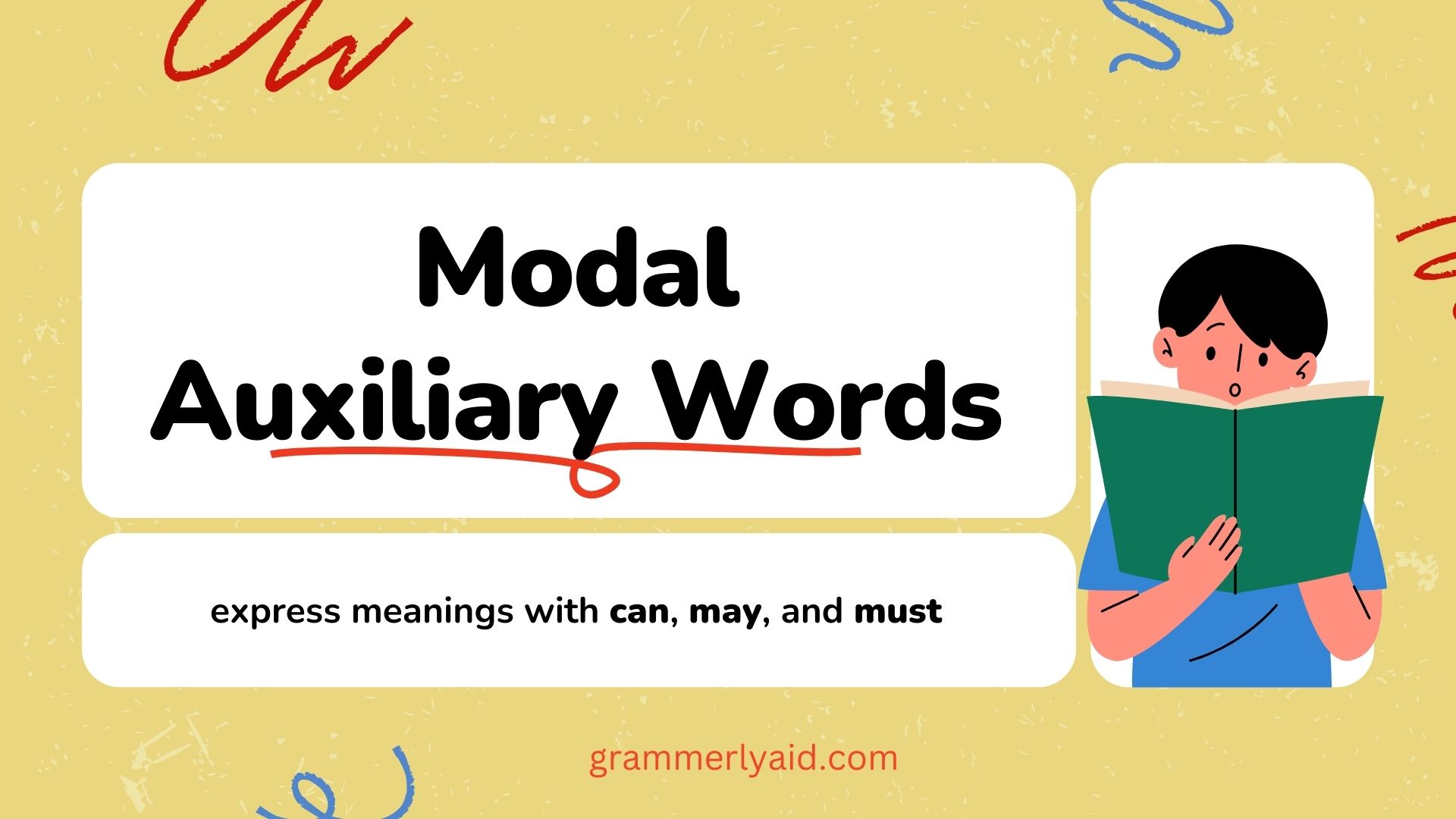
Modal Verbs are auxiliary verbs that are used to express ability, possibility, purpose, politeness, request, etc. Can, could, may, might, shall, should, will, would, must, and ought, are called the Model Auxiliary.
Model Auxiliary has 03 features:
Modal auxiliaries are never used alone, it is very important to have a principal verb with them. The principal verb can either be explicit or it can be implied. As; (I) I can go. (II) Will you go? Yes, I will.
The present tense of the modal auxiliary remains the same in any person. As; (I) I may pass. (II) You may pass. (III) He may pass.
Modal auxiliary does not have infinitive or participle forms. As; to will; to must; maying.
List of Modal Verbs
CAN
ability
I can bench 150 pounds.
Informal permission
Can I help you with your luggage?
possibility
Eating too many sweets can cause obesity.
MUST
strong obligation
You must come see this immediately.
Inference/ logical conclusion/ certainty
She must be exhausted after running the marathon.
MUST NOT
Prohibition / restriction
You must not lie to your parents.
SHALL
Asking what to do
Shall we have some tea?
offer
Shall I grab your coat?
suggestion
I shall have to help you next time.
WILL
Instant decision
I will go home now.
promise
I will be there soon.
invitation
Will you come with me to the show?
prediction
It will be cloudy tomorrow.
Future tense auxiliary
Next week, I will be here early.
COULD
suggestion
I could help you with decorating these cookies.
request
Could I please use your pen?
Ability in the past
I could have been a champion diver.
Ask for permission
Could I please go to the bathroom?
MAY
possibility
I may try to go to the library tomorrow.
Ask for permission
May I have a piece of pie?
MIGHT
Slight possibility
She might lose her tooth tonight.
Past form of “may” when telling what someone else said
Grandma said she might stay home.
SHOULD
advice
Should I stay here or go?
Recommending action
You should try this candy.
Uncertain prediction/guess
It should begin in a few minutes.
Logical deduction/inference
I studied hard, so I should be ready to take the exam.
OUGHT TO
advice
You ought to wear your coat in the rain.
Logical deduction/inference
15 minutes ought to be enough time to bake these cupcakes.
WOULD
Asking for permission
Would you like to dance?
request
Would you please come here?
invitation
Would you like to come with me?
preference
I would prefer the aisle seat.
habit
When I went to camp, I would swim every night.
Modal Verb Example Sentences
Ram can solve the problem in no time.
My brother could drive a car at the age of eighteen.
May I use your laptop?
You might take a little water.
students shall pay their fees by the 10th of every month.
People should obey the traffic laws of the country.
We will try to help you in this UPSC examination.
Every morning he would go for a long walk.
He must go home.
we ought to help the poor.
How to Use Helping Verbs with Examples?
To use helping verbs effectively, we should know how it is conjugated to represent a different tense. the examples are given below to understand.
I am going to speak at the inaugural ceremony after 02 days.
We are having chicken for dinner tonight.
What are you doing?
The children have been waiting to have balloons and ice cream.
The Gayatri Apartment was built by J & K Builders.
You cannot change your car.
Do you need any help from me?
I did have a friend.
Were you feeling nervous when you were giving the interview?
Ramesh will take care of the hostel students.
Examples:
Himani is making chicken.
she has spoken to the college principal about it already.
Tejveer has been drinking for an hour.
Ramesh was working at the Restaurant.
Roslin had not worked at the museum for five years.
My friend’s circle had been wanting to come village for a while now.
Mohit will be playing the piano at the party tomorrow.
The plumber will have fixed all the pipelines in a week.
The social workers will have been serving dinner for fifty people at this time tomorrow.
List of Helping Verbs of All Tenses
there is a list of helping verbs and how they represent the different tenses:
Serial Number
Tense
Name of Helping Verb
1
Present Continuous
Is
2
Present Perfect
Has
3
Present Perfect Continuous
Has been
4
Past Continuous
Was
5
Past Perfect
Has not
6
Past Perfect Continuous
Had been
7
Future Continuous
Will be
8
Future Perfect
Will have
9
Future Perfect Continuous
Will have been
Helping Verbs Exercises
Fill in the blanks with the helping verb in the following sentences:
We _____ been waiting for our examination results for 10 days.
I ______ meet Gopal soon.
We ______ going to be fit.
I just ________ stand your group of friends.
She _______ working as a nurse for two years now.
They ______ be reaching Mumbai by 9 a.m.
_____ you still staying near Ring road park?
The flight ___________ arrived tomorrow at the airport by 4 p.m.
You ________ looking very smart.
The Prime Minister ______ giving the presidential address for the Independence day ceremony